Welcome to Qingdao ACES
- All
- Product Name
- Product Keyword
- Product Model
- Product Summary
- Product Description
- Multi Field Search
Please Choose Your Language


Views: 0 Author: Site Editor Publish Time: 2026-09-27 Origin: Site


Procurement teams and design engineers frequently stall when choosing between brass and bronze for fluid handling, wear-resistant, or structural components. The choice gets significantly more complicated when you factor in specific casting processes like sand casting versus die casting. Picking the wrong alloy or casting methodology often leads to premature part failure. For instance, standard brass components may suffer from dezincification in aggressive water environments. You might also face excessive tooling expenses or unacceptable secondary machining rates if you mismatch the material and the process.
This article provides a clear, engineering-led comparison to help you navigate these choices. We will contrast a standard brass casting part with a robust bronze counterpart. You will explore the metallurgical realities, process limitations, and mechanical advantages of each metal. Ultimately, you will learn how to align your material selection directly with your engineering requirements and production volume.
Material Core: Brass (copper-zinc) prioritizes machinability and cost-efficiency; Bronze (copper-tin/aluminum) excels in high-stress, corrosive, and heavy-wear environments.
Process Reality: Sand casting is ideal for low-to-medium volume, heavy, or complex internal geometry parts, but requires planning for lower surface finish and looser initial tolerances.
Application Fit: Brass is typically chosen for low-pressure fluid components, while bronze is the industry standard for high-friction industrial machinery and marine applications.
Cost vs. Outcome: While a brass casting part often has lower raw material costs, a bronze part may yield a lower total lifecycle cost in demanding environments due to superior longevity.
To make sound engineering decisions, you must deeply understand the metallurgical differences between these two common copper alloys. They behave differently in the furnace. They behave differently during the pour. They also react differently inside the CNC machine.
Brass essentially consists of copper alloyed primarily with zinc. Zinc gives brass exceptionally high ductility. It ensures excellent machinability. Zinc also significantly lowers the melting point of the alloy. A lower melting point reduces energy consumption during the casting pour. Foundries appreciate standard brass because it flows smoothly. It fills intricate mold cavities effortlessly.
Brass metallurgy often involves balancing alpha and beta phases. Alpha brasses contain less than 37% zinc. They offer superb cold-working properties. Beta brasses contain more zinc. They are harder and better suited for hot casting. Historically, foundries added small amounts of lead to brass. Lead acts as a microscopic lubricant during machining. It allows the metal to chip easily. However, modern environmental standards restrict lead usage heavily.
Bronze takes a completely different chemical path. We typically alloy copper with elements like tin, aluminum, or silicon. These specific additions dramatically transform the base metal. Bronze delivers much higher tensile strength than standard brass. It offers superior wear resistance under extreme pressure. It also exhibits minimal friction when sliding against other metallic surfaces. You will often see bronze specified in environments where mechanical toughness remains non-negotiable.
Bronze metallurgy focuses on different strengthening mechanisms. Tin bronze (often called phosphor bronze) uses tin to increase strength and corrosion resistance. Phosphorus acts as a deoxidizing agent during the melt. Aluminum bronze adds aluminum and iron. This creates an incredibly tough alloy. It resists heavy loads and extreme shock impacts. Silicon bronze combines copper, silicon, and zinc. It pours beautifully and welds easily. Artists and industrial engineers both prize silicon bronze for its finish and durability.
Corrosion constantly threatens structural integrity. Standard brass faces a unique and dangerous vulnerability called dezincification. When exposed to certain aggressive water conditions, the zinc actually leaches out of the alloy. This chemical reaction leaves a weak, porous copper shell behind. You must evaluate this specific risk carefully before designing plumbing or marine applications.
Bronze offers a highly robust defense against corrosion. It naturally develops a protective surface patina over time. This oxidized exterior layer prevents further internal degradation. Engineers rely on bronze for saltwater immersion. They trust it for industrial chemical exposure. It survives brutal environments where brass quickly degrades and fails.
Secondary machining heavily influences final production expenses. We measure a material's machinability against an industry-standard index. Free-machining brass generally represents the baseline rating of 100%. CNC machines cut brass rapidly. The metal shears cleanly. It produces small, highly manageable chips. Tool wear remains incredibly low. This reduces CNC cycle times and lowers immediate manufacturing expenses.
Bronze alloys present a much tougher challenge for machinists. Aluminum bronze, for example, might hold a machinability rating of just 30% to 50%. It requires slower feed rates. Operators must use stronger, more expensive tooling. Slower CNC cycle times inevitably increase the final component price.
Property | Brass Alloys | Bronze Alloys |
|---|---|---|
Primary Alloying Element | Zinc | Tin, Aluminum, or Silicon |
Machinability | Excellent (Baseline 100%) | Moderate to Low (30% - 50%) |
Tensile Strength | Moderate | High to Very High |
Corrosion Resistance | Vulnerable to dezincification | Excellent (develops natural patina) |
Melting Point | Lower (Energy efficient) | Higher (Requires more thermal energy) |
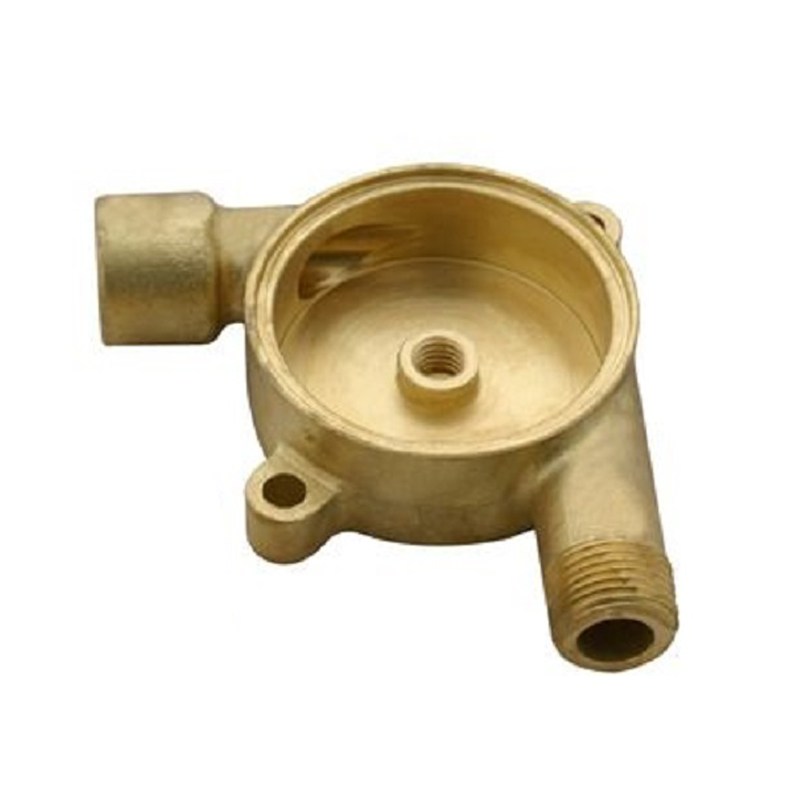
You must align your chosen alloy with the right manufacturing process. Sand casting remains a cornerstone of heavy metal manufacturing.
We define sand casting as a highly versatile manufacturing method. It utilizes expendable sand molds to form complex metal shapes. It offers incredibly low tooling investments compared to permanent mold processes. You can cast both brass and bronze successfully using this traditional method.
Let us compare brass sand casting directly against brass die casting or investment casting. Die casting uses expensive machined steel molds. It suits massive, high-volume production runs. Investment casting provides excellent surface finishes. However, investment casting costs significantly more per unit. Sand casting hits an ideal sweet spot. It allows you to produce much larger parts. It supports cheaper, faster mold iterations. You do sacrifice some out-of-the-mold surface finish. The initial dimensional tolerances remain somewhat looser compared to die casting.
Foundries use different sand systems to achieve varied results. Green sand uses clay and water as binding agents. It is inexpensive and highly reusable. However, green sand can introduce moisture into the mold cavity. This moisture sometimes turns into steam during the pour, causing surface defects. No-bake sand casting uses chemical binders. These chemical binders harden the sand mold perfectly. No-bake molds provide superior dimensional accuracy. They leave a much cleaner surface finish on the final casting.
Producing a reliable bronze sand casting part requires deep foundry expertise. Bronze behaves quite differently than brass as it cools. You must address the specific cooling rates carefully. You must calculate precise shrinkage allowances for bronze in sand molds. Bronze generally exhibits a wider freezing range than brass.
This wide freezing range increases internal porosity risks. Gas entrapment easily ruins heavy-wall structural components. Experienced foundries mitigate these risks meticulously. They use advanced argon or nitrogen degassing techniques during the melt. They design mathematically optimized gating and risers. These channels feed molten metal continuously as the part shrinks. Proper mold venting allows trapped gases to escape before they form invisible internal voids.
Cooling rates also dictate the metallurgical grain structure. A slow cooling rate in a sand mold creates larger grain sizes. Large grains can slightly reduce the ultimate tensile strength of the part. Foundries manage this by placing metal chills inside the sand mold. Chills force the metal to cool faster in critical areas, ensuring a fine, strong grain structure where you need it most.
Tooling amortization often dictates project feasibility. Sand casting tooling relies on wooden, plastic, or aluminum patterns. These simple patterns cost a tiny fraction of the permanent steel molds used in die casting. This reality makes sand casting the most viable option for low-to-mid volume production runs. You can update or modify a sand pattern cheaply if the engineering design changes mid-production.
Material properties and casting methods only matter when applied to real-world engineering problems. Let us explore exactly where each alloy belongs.
Fluid control systems demand highly reliable, leak-free performance. Standard brass excels in everyday valves and pipe fittings. Manufacturers prefer brass here due to its lower raw material cost. Its ease of threading keeps assembly line speeds extremely high. Most residential and commercial low-pressure water systems rely entirely on brass components.
However, aggressive fluids demand a much tougher approach. You must specify a bronze pump casting part or bronze casting manifold parts for severe environments. Bronze becomes absolutely necessary when handling corrosive fluids. It handles raw seawater effortlessly. High-pressure hydraulic systems also require bronze. Bronze retains high pressure without structural deformation over time. Brass might yield or stretch under similar continuous pressure loads.
In marine environments, the choice becomes blatantly clear. Seawater rapidly destroys standard brass through dezincification. Marine engineers universally specify bronze for propellers, thru-hull fittings, and rudder components. Aluminum bronze and manganese bronze dominate this sector. They withstand highly corrosive, oxygen-rich saltwater environments flawlessly.
Industrial machinery creates intense internal friction. Heavy moving parts grind against one another continuously. A bronze casting machinery part outperforms brass easily in these punishing conditions. Think of heavy-duty crane bearings, massive gear sets, and structural excavator bushings.
Bronze thrives under continuous mechanical stress. Certain bronze alloys offer self-lubricating properties. They resist galling and wear even when external oil lubrication fails. Brass lacks this inherent lubricity completely. If you use brass in a high-load, high-friction application, it will wear down rapidly. The component will fail prematurely. This failure causes expensive unplanned machinery downtime.
Procurement teams and design engineers must navigate several critical variables before issuing a purchase order.
Lead time constraints heavily influence material and process selection. Pattern creation for sand casting takes a few weeks initially. However, once the pattern exists, sand casting produces hundreds of parts rapidly. If you face extreme urgency, CNC machining from a solid billet might seem faster. Yet, machining from solid billet creates massive material waste. Sand casting provides a far more economical path for repeating production runs.
Compliance and environmental regulations strictly shape material choices today. You must navigate complex lead-free requirements for modern fluid applications. For example, NSF/ANSI 61 standards tightly govern materials contacting potable drinking water. Both brass and bronze foundries offer custom, lead-free formulations. They often use bismuth or silicon to replace lead. You must ensure your foundry can pour these specific certified alloys accurately.
Dimensional tolerance management remains critical. You must manage your expectations for "as-cast" tolerances in sand casting. The coarse sand mold surface leaves a rougher exterior texture. You must build adequate machining allowances into your 3D CAD models. Do not specify tight tolerances on "as-cast" surfaces. Sand casting generally holds dimensional tolerances of ±0.030 inches per inch. Identify which specific faces, bores, or threads require tight CNC machining. The foundry will add extra material to those specific areas. This extra material gives the CNC machinist enough stock to cut a perfect, clean surface.
Not all foundries possess the technical expertise to pour complex copper alloys successfully. You must ask highly targeted questions when vetting a new supplier for custom bronze casting parts.
Here are essential criteria to evaluate your foundry partner:
Ask about their internal scrap rates for heavy-walled bronze castings. High scrap rates indicate poor thermal process control.
Inquire how they manage continuous alloy certification. Ensure they use active spectrometer testing on the foundry floor. This verifies the chemical composition before they pour the metal.
Check if they offer in-house secondary machining. Single-source vendors reduce logistical delays. They also take full responsibility for the finished dimensional tolerances.
Request documented degassing procedures. This paperwork proves they actively mitigate internal porosity risks during the melting phase.
Choosing the correct metal and casting process requires careful engineering analysis. The final decision hinges directly on the intersection of application stress and production volume. You must weigh the mechanical demands of friction and corrosion against tooling amortization budgets.
Default to a standard brass component for cost-sensitive, high-machinability, and low-stress applications. Brass keeps your initial material and CNC machining expenses low. Upgrade to a robust bronze sand casting part for heavy-duty, corrosive, or high-wear industrial environments. Bronze delivers the extreme tensile strength and chemical resistance needed to prevent premature structural failure.
Evaluate your project's annual estimated usage and mechanical stress requirements today. Gather your current CAD files and performance specifications. Contact a reputable foundry directly. Ask them for a process-specific manufacturability review. Their engineering team will help you optimize your design for the perfect pour.
A: Yes. While die casting is popular for high-volume brass, brass sand casting and bronze sand casting are both highly effective. They are especially suitable for heavy, thick-walled, or low-volume parts. Sand casting allows larger geometries. It offers immense flexibility for both copper alloys without requiring expensive permanent steel molds.
A: Bronze generally has a higher raw material cost. It also takes slightly more time to machine. This makes the final bronze part more expensive initially. However, its superior wear resistance and high tensile strength prevent frequent component failures. This extreme durability justifies the higher upfront investment in harsh operating conditions.
A: Porosity is managed through proper gate and riser design in the sand mold. Foundries must control pouring temperatures strictly. They utilize active degassing techniques during melting to remove trapped gases. Always request metallurgical certifications from your foundry. This verifies the structural integrity of your castings before assembly.


