Welcome to Qingdao ACES
- All
- Product Name
- Product Keyword
- Product Model
- Product Summary
- Product Description
- Multi Field Search
Please Choose Your Language


Views: 0 Author: Site Editor Publish Time: 2026-06-11 Origin: Site


Vendor selection in high-pressure die casting carries immense business stakes. You face substantial upfront tooling investments. Supplier lock-in means a poor choice inevitably leads to long-term production bottlenecks. Shifting from initial prototyping to high-volume manufacturing demands serious scrutiny. You must move past slick sales pitches. Instead, you need to evaluate hard engineering capabilities. You must verify robust process controls and financial stability.
This guide provides an evidence-based framework. It helps you audit candidates thoroughly. We aim to help you evaluate and confidently select a reliable partner. They must be fully equipped to meet your exact technical specifications. They must also meet your scalability requirements. Read on to master the vendor selection process. You will discover how to match machine tonnage to your part sizes. We reveal hidden risks in tooling contracts. Proper vetting ensures consistent lot-to-lot quality. It secures your supply chain against unexpected disruptions.
A reliable partner must demonstrate proven Design for Manufacturability (DFM) capabilities to prevent costly tooling revisions.
Evaluate manufacturers based on their machine tonnage range, in-house secondary operations, and stringent defect mitigation protocols.
Quality control should be verifiable through certifications (ISO, IATF) and advanced inspection technologies (CMM, X-Ray).
Success begins long before you review a supplier portfolio. You must establish rigorous baselines first. Define your project scope clearly before engaging a Die Casting Manufacturer. Moving straight to the quote phase without internal clarity causes downstream delays.
You must outline your fundamental production requirements. We recommend creating a standardized internal document. This document acts as your baseline during negotiations. It keeps your team aligned on core objectives.
Expected Annual Volumes (EAU): Volume dictates tooling scale. Low volumes might require single-cavity tools. High volumes demand multi-cavity dies.
Target Cost Per Part: Establish realistic cost targets early. This helps filter out vendors misaligned with your budget.
Required Lead Times: Separate your timeline into phases. Define dates for first-article inspection (FAI). Define dates for full production ramp-up.
Material selection impacts every aspect of production. You must clarify required mechanical properties. Consider thermal conductivity for electronics. Consider corrosion resistance for marine applications. Evaluate weight reduction needs for aerospace components. Determine if standard alloys suffice or if specialized materials are necessary.
Alloy Grade | Key Characteristics | Common Applications |
|---|---|---|
A380 | Excellent combination of casting, mechanical, and thermal properties. Highly cost-effective. | General purpose, electronic housings, engine brackets. |
A360 | Superior corrosion resistance. Excellent pressure tightness and fluidity. | Marine components, fluid handling systems, outdoor enclosures. |
A413 | High fluidity. Excellent for intricate details and complex geometries. | Complex structural parts, components requiring thin walls. |
You cannot treat die casting like precision CNC machining. The process has inherent physical limitations. Document your Critical-to-Quality (CTQ) dimensions clearly. Detail your draft angle limitations. Draft angles allow parts to eject from the mold without galling. Specify acceptable porosity levels. Porosity is natural in die casting. You must define where it is acceptable and where it is strictly forbidden. This sets precise baseline expectations for your Request for Quote (RFQ).
Once you define your baselines, the vendor evaluation begins. You must assess candidates across three core operational dimensions. We look for engineering depth, equipment versatility, and operational accountability. When evaluating Aluminum Die Casting options, these factors separate average shops from elite partners.
Early-stage collaboration defines the trajectory of your project. Assess their ability to conduct advanced flow and thermal simulations. Industry-standard software like Magmasoft is essential. These tools visualize molten metal behavior inside the die. They optimize gating systems. They plan effective venting. They ensure uniform wall thickness.
Engineers must finalize these elements prior to cutting any tool steel. Mistakes in steel are incredibly expensive to fix. Look for a track record of design optimization. A capable partner actively reduces part weight. They minimize necessary secondary machining operations. They achieve all this without compromising the structural integrity of your component.
Press fleet diversity matters significantly. Verify their machine tonnage aligns perfectly with your part size. Tonnage refers to the clamping force holding the die closed. It typically ranges from 400T for small parts to 3000T for large structural components. A diverse fleet prevents production delays. It eliminates machine bottlenecks.
Evaluate their automation levels next. Modern die casting relies heavily on automated work cells. Look for the integration of automated ladles. These pour molten metal consistently. Look for automated sprayers. They apply release agents uniformly to prevent sticking. Robotic extractors remove finished parts safely. Automation ensures process repeatability. It also lowers per-unit labor costs.
Die casting rarely produces a perfectly finished part straight from the mold. Secondary operations are almost always necessary. Determine if they handle CNC machining internally. Ask about their trimming and deburring processes. Surface finishing is equally critical. Verify if they manage powder coating or anodizing under their own roof.
Single-source accountability provides massive advantages. It reduces logistical risks. Parts do not travel between multiple third-party vendors. It compresses your overall lead times. Most importantly, it eliminates "finger-pointing" when quality issues arise. The primary manufacturer assumes total responsibility for the final delivered component.
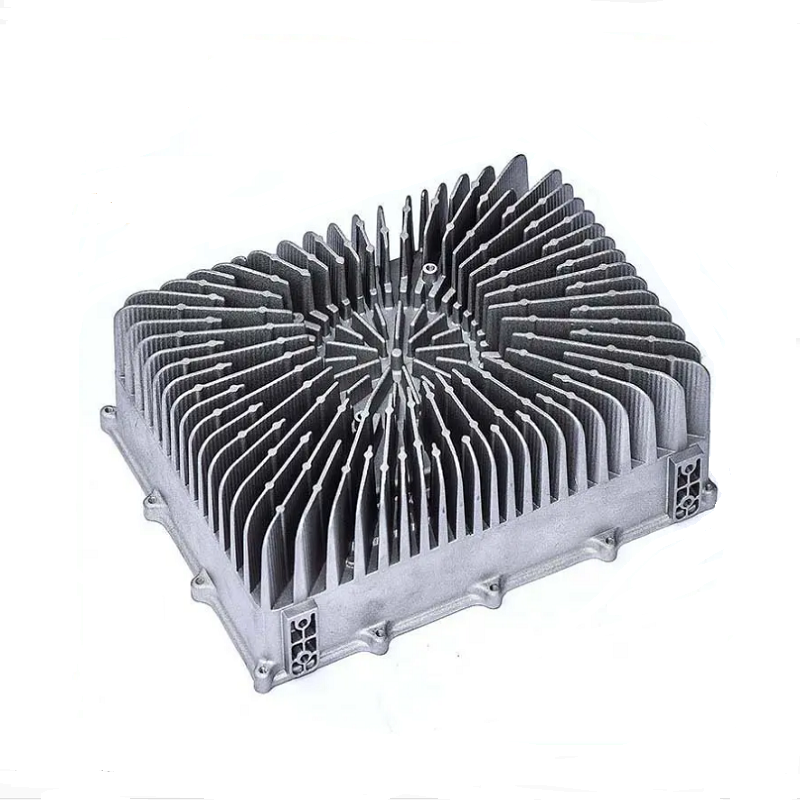
Quality cannot be inspected into a part. It must be built into the process. However, robust inspection verifies the process works. You must evaluate a supplier's commitment to verifiable quality standards. We recommend a strict audit of their compliance documentation.
Demand explicit proof of relevant industry certifications. Do not accept expired certificates. ISO 9001 serves as the foundational baseline for general manufacturing. If you operate in the automotive sector, IATF 16949 is strictly mandatory. It focuses heavily on defect prevention and variation reduction. Aerospace applications require AS9100 certification. This standard enforces extreme traceability protocols.
Check for a comprehensive internal testing infrastructure. Reliable manufacturers utilize coordinate measuring machines (CMM). These verify tight dimensional tolerances against your CAD models. They also deploy real-time X-ray inspection. X-rays detect internal porosity and voids hidden beneath the surface. Finally, look for spectrometer analysis capabilities. Spectrometers verify the exact chemical composition of the alloy before casting begins.
Evaluate their approach to systematic quality management. Look for manufacturers deploying rigorous monitoring frameworks. For example, ACES (Advanced Casting Evaluation System) provides exceptional parameter oversight. Equivalent statistical process control (SPC) methodologies are also acceptable. These systems track variables like injection speed, metal temperature, and cooling rates. They ensure lot-to-lot consistency. They guarantee the structural integrity of every batch.
Common Mistake: Avoid manufacturers relying solely on visual end-of-line inspections. Visual checks cannot detect internal structural flaws or minor dimensional deviations.
Even highly capable manufacturers carry hidden business risks. You must look beyond the engineering floor. Scrutinize their business practices. Investigate their supply chain resilience. A disruption in their operations instantly becomes your supply chain crisis.
Tooling disputes plague the manufacturing industry. Scrutinize tooling contracts meticulously. Clarify exactly who legally owns the die once you pay the invoice. You must own the custom tooling outright. Determine the guaranteed shot life of the mold. High-quality H13 steel dies typically last for 100,000 shots.
Clarify maintenance responsibilities clearly. The manufacturer should absorb routine maintenance costs. They handle daily cleaning and minor pin replacements. However, major overhauls often require negotiation. Get these terms in writing before authorizing production.
Investigate their actual capacity utilization. Ask how many shifts they run daily. A facility running at 95% capacity looks successful on paper. However, it leaves zero room for your volume surges. It cannot absorb unexpected demand spikes. We prefer partners operating at 75% to 80% capacity. They possess the agility to scale production alongside your business growth.
Assess their supply chain resilience aggressively. Aluminum is a globally traded commodity. Reliable manufacturers maintain diversified ingot suppliers. They do not rely on a single local foundry. This diversification buffers against raw material shortages. It protects you from extreme price volatility. Ask how they track London Metal Exchange (LME) pricing. Understand how market fluctuations impact your unit price.
You now understand the evaluation criteria. The next step involves executing a structured shortlisting process. We emphasize standardization here. You must compare "apples to apples" when reviewing different vendors.
Send identical, highly detailed RFQs to 3 or 4 shortlisted candidates. Provide them with complete CAD files and 2D drawings. Require itemized breakdowns in their proposals. Do not accept a single lump-sum price. You need visibility into specific cost categories.
Raw material costs.
Processing and machine rates.
Tooling engineering and fabrication.
Scrap and rework allowances.
Packaging and logistics fees.
Analyze the returned quotes objectively. Be highly suspicious of outliers. Discard quotes sitting significantly lower than the industry average. These lowball numbers often indicate compromised tooling quality. They usually hide expensive downstream costs. A cheap mold requires constant weld repairs. It produces high scrap rates. It ultimately costs you far more over the product lifecycle.
The final step requires a physical or comprehensive virtual facility audit. You must verify their claims directly.
Look for: Strict 5S organization on the factory floor. A clean, orderly plant indicates disciplined management. Verify actual machine cycle times match their quoted times. Observe their handling of scrap and rework. Transparent scrap handling proves they acknowledge and manage defects properly.
Ask for: Detailed case studies. Request pilot run data. Focus exclusively on parts sharing similar complexities to yours. Ask to speak with existing customers in your specific industry.
Choosing an Aluminum Die Casting partner represents a major strategic decision. It is an investment in risk management. It establishes long-term manufacturing stability. Rushing this process leads to missed production deadlines. It causes budget overruns and field failures.
Take action today to secure your supply chain. Finalize your internal technical specifications. Prepare a comprehensive, standardized RFQ document. Reach out to your shortlisted candidates. Initiate rigorous facility audits with verified, compliance-focused manufacturers. Follow this framework diligently. You will build a resilient manufacturing partnership designed for long-term success.
A: It typically ranges from 4 to 12 weeks. This depends heavily on part complexity and overall die size. It also depends on the manufacturer's internal tool-room capacity. Simple parts require less engineering time. Complex components requiring multiple side-actions or sliders extend the fabrication schedule significantly.
A: In standard agreements, the buyer owns the custom tooling. The manufacturer physically holds and maintains it at their facility. This arrangement must be explicitly stated in the tooling contract. It ensures you can transfer production to another vendor if necessary.
A: They control it through optimized gating design and thermal management. They use vacuum-assisted die casting to evacuate air before injection. They enforce strictly controlled shot speeds. Finally, they validate internal density post-production using advanced X-ray inspection equipment.
A: Yes, due to high setup costs, MOQs are standard. They typically range from 1,000 to 5,000 parts per run. However, some specialized manufacturers accept lower volumes. This usually applies to high-value, complex components where higher unit prices absorb the setup expenses.


