Welcome to Qingdao ACES
- All
- Product Name
- Product Keyword
- Product Model
- Product Summary
- Product Description
- Multi Field Search
Please Choose Your Language


Views: 0 Author: Site Editor Publish Time: 2026-09-20 Origin: Site


Engineers and procurement teams constantly face a tough balancing act. You must weigh tooling costs, lead times, and part complexity. Sourcing heavy or intricate metal components demands careful strategy. Sand casting is far more than a traditional manufacturing method. It represents a highly strategic, low-barrier-to-entry process. It shines when you face specific production realities. These include low-to-medium volumes, massive part sizes, and complex internal cavities.
This article delivers a transparent, evidence-based evaluation of the process. We will explore material suitability, process mechanics, and commercial viability. This guide aims to help buyers make highly informed sourcing decisions. You will learn exactly when to specify this method. We also provide actionable tips to optimize your designs before production begins.
Cost-Efficiency at Low Volumes: Sand casting offers significantly lower tooling costs compared to die or investment casting, making it the financially sound choice for low-to-medium production runs.
Unmatched Size and Geometry Flexibility: Ideal for heavy, complex components requiring internal cores (e.g., an industrial pump part or engine block) that cannot be economically machined or forged.
Quality Relies on Sand Properties: The structural integrity and surface finish of a casting are directly dictated by the specific properties of the molding sand (permeability, strength, and refractoriness).
Clear Limitations: It is not a precision process out-of-the-mold; buyers must account for secondary machining costs for tight tolerances and superior surface finishes.
Demystifying the production cycle helps us see exactly where lead times generate. We also see where costs accumulate during manufacturing. Understanding these steps allows you to optimize your component designs early.
Pattern and Core Making: Production begins by creating a reusable pattern. Foundries craft these from wood, plastic, or metal. The pattern mimics the final part but includes shrinkage allowances. We use expendable sand cores to form internal cavities. Pattern wear heavily dictates your tooling lifecycle. Wood patterns cost less but wear out faster. Metal patterns cost more but survive higher production runs.
Mold Preparation: Technicians pack specialized sand around the pattern inside a flask. The flask separates into a top half (cope) and a bottom half (drag). They also design a gating system. This includes the sprue, runners, and gates. Proper gating ensures controlled metal flow. It minimizes turbulence, reducing the risk of trapped oxides.
Pouring and Solidification: Workers pour molten metal into the prepared mold cavity. The physics of this stage require careful temperature control. Foundries must manage the cooling rate strictly. Controlled cooling prevents shrinkage defects. It also stops internal porosity from ruining the part.
Shakeout and Finishing: Once the metal solidifies, technicians break away the sand mold. They cut off the gating system components. The part then undergoes initial cleaning, often via shot blasting. This stage frequently reveals rough surfaces. It highlights the impending need for secondary machining.
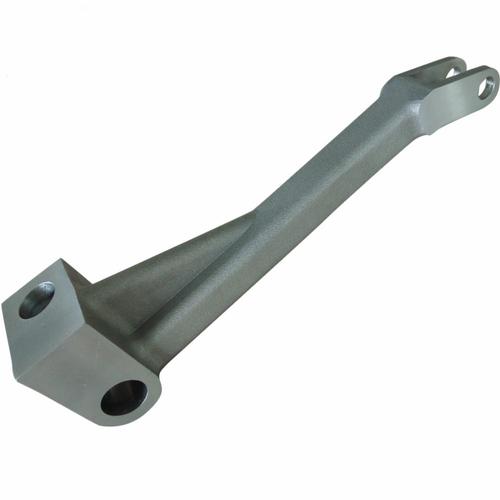
The quality of your final component depends heavily on the sand mixture. Foundries carefully balance specific properties. Failing to control these factors leads directly to scrap parts.
Permeability measures how easily gases pass through the mold. When molten metal enters the cavity, moisture in the mold rapidly expands into steam. The sand must allow these gases to escape during pouring. If permeability drops too low, trapped gases create voids. The consequence of failure here is gas porosity in the final casting. You often only discover these voids during expensive secondary machining operations.
Refractoriness defines the mold's ability to withstand extreme temperatures without melting. The sand must not fuse to the molten metal. This property is absolutely critical when pouring high-temp alloys. For instance, pouring steel or a heavy iron casting part demands high refractoriness. Poor refractoriness leads to severe burn-on. Burn-on creates a rough, fused crust on the part surface.
Strength properties ensure the mold maintains its dimensional integrity. Green strength refers to the damp sand's ability to hold its shape upon pattern removal. Without sufficient green strength, the mold collapses before pouring even begins. Dry strength refers to the mold's rigidity during the molten metal pour. The hot metal exerts immense pressure. High dry strength prevents mold wall movement, ensuring dimensional stability.
Collapsibility measures how easily the sand breaks down after the metal solidifies. As metal cools, it naturally shrinks. The sand must yield to this shrinkage. If the mold remains too rigid, it causes tearing or cracking in the metal. Excellent collapsibility proves highly relevant for softer, high-shrinkage metals like an aluminium sand casting.
Selecting the right alloy dictates the performance and longevity of your component. This process supports a vast array of both ferrous and non-ferrous metals. You must match the material's mechanical properties to your end-use requirements.
Ferrous metals dominate heavy industrial applications. They offer incredible strength and durability.
Iron (Gray, Ductile, Malleable): Gray iron provides excellent castability and superior vibration damping. It remains ideal for machine bases, engine blocks, and heavy equipment. Ductile iron offers higher tensile strength and impact resistance.
Steel: Steel casting requires specialized mold materials due to exceedingly high pouring temperatures. Engineers specify cast steel for high-stress structural components. It excels in construction equipment and heavy mining machinery.
Non-ferrous metals provide unique benefits like lower weight and corrosion resistance.
Aluminium Alloys: Aluminium provides an exceptional strength-to-weight ratio. It also offers natural corrosion resistance. Designers must account for specific shrinkage allowances required by aluminium during cooling.
Copper-Based Alloys: You must differentiate copper alloy applications carefully. A brass casting part is often chosen for low-friction or decorative needs. Conversely, a bronze sand casting part is evaluated for superior marine corrosion resistance and heavy-duty bearing properties.
Material Family | Common Grade/Alloy | Key Advantage | Typical Applications |
|---|---|---|---|
Cast Iron | Gray Iron (ASTM A48) | Vibration damping, wear resistance | Pump housings, machine tool bases |
Cast Iron | Ductile Iron (ASTM A536) | High ductility, impact strength | Automotive suspension, gears |
Aluminium | A356.0 | Lightweight, highly castable | Aerospace parts, intake manifolds |
Bronze | Aluminum Bronze | High corrosion resistance, strength | Marine hardware, heavy bearings |
Articulating the business case requires looking beyond just the unit price. We must evaluate tooling, flexibility, and time-to-market. This method offers distinct commercial advantages over competing processes.
Tooling expenses often dictate manufacturing choices. Compare the cost of a basic wood or polyurethane pattern to a hardened steel die casting mold. Die casting tools easily cost tens of thousands of dollars. Pattern making requires a fraction of that investment. This makes the process incredibly attractive for low-volume runs.
Disposable sand cores unlock massive design potential. They allow for complex internal channels that are impossible to create via CNC machining alone. For example, complex fluid handling geometries in an industrial pump part rely entirely on precision core placement. You can consolidate multiple welded assemblies into one single cast component.
Few processes rival this method in terms of scalability. You can cast components weighing just a few ounces. You can scale up to massive parts weighing several tons, like ship propellers. The process scales easily because you simply build a larger sand flask.
Speed to market is crucial for new product development. Foundries can produce a wood or composite pattern quickly. It takes weeks instead of the months required for complex metal tooling. This accelerated timeline allows engineers to perform initial testing much sooner.
Building a reliable supply chain requires acknowledging process constraints. No manufacturing method is perfect. You must understand these limitations to avoid expensive post-production surprises.
The texture of the sand naturally transfers to the metal. You must acknowledge the typical rough surface finishes involved. Parts usually exit the mold with an Ra (Roughness Average) of 12.5 to 25 µm. Cosmetic surfaces strictly require secondary operations. You will need grinding, polishing, or extensive machining for consumer-facing aesthetics.
This is a near-net-shape process, not a high-precision one. Standard casting tolerances generally fall under ISO 8062 CT10-CT12. The sand shifts slightly under heat and pressure. Therefore, high-precision features must be CNC machined post-casting. Always add a machining allowance (typically 2 to 5 mm) to critical mating surfaces.
Mold creation is inherently labor-intensive. Even automated molding lines take longer per cycle than die casting machines. At high production volumes (e.g., 10,000+ units annually), the unit economics shift. Die casting or permanent mold casting become more favorable despite their higher upfront tooling costs.
Procurement success relies on strong communication with your foundry partner. You must provide well-optimized designs and clear quality expectations. Follow these best practices to ensure a smooth purchasing experience.
Do not send standard machined part drawings to a foundry. You must incorporate draft angles (typically 1 to 3 degrees) to allow safe pattern removal. Maintain uniform wall thicknesses wherever possible. Uneven walls cool at different rates, causing hot spots and shrinkage porosity. Use generous fillets to eliminate sharp internal corners. Sharp corners concentrate stress and cause tearing.
Visual inspections only catch surface flaws. Instruct your buyers to specify Non-Destructive Testing (NDT) for critical components. Require dye penetrant testing to uncover microscopic surface cracks. Demand X-ray or ultrasonic testing to verify internal soundness. Identifying voids before machining saves thousands of dollars in wasted CNC time.
Do not look at the raw part quote in a vacuum. You must calculate the overall expense accurately. Remind buyers to calculate the cost of the raw casting plus the required secondary machining and finishing. You must factor in these additional steps when sourcing custom sand casting parts. Sometimes a slightly more expensive foundry offers closer tolerances, saving you heavy machining costs later.
Strategic procurement relies on matching the right process to the right project parameters. This method continues to prove its value across countless heavy industries.
Recognize the strategic value: It remains a cornerstone of manufacturing due to its unrivaled balance of low tooling costs, size scalability, and geometric freedom.
Run the numbers: Always evaluate the break-even point between your initial tooling investment and your anticipated production volume.
Collaborate early: Encourage your engineering teams to consult with a foundry engineer during the CAD phase. Optimizing part design early ensures maximum cost-efficiency and defect reduction.
Plan for finishing: Accept that machining is part of the reality. Design your cast parts with ample material allowances on critical mating faces.
A: The process offers incredible volume flexibility. Because tooling is cheap, MOQs can be as low as 1 to 10 units for initial prototyping or legacy replacement parts. However, unit prices drop significantly once you reach volumes of 100 or more.
A: Sand casting provides lower tooling costs, suits lower volumes, produces rougher finishes, and handles much larger sizes. Conversely, die casting requires high upfront tooling costs. It suits high-volume production, delivers excellent surface finishes, but is restricted to smaller part sizes.
A: Yes, and they almost always are. Sand casting is typically used to create a "near-net shape." Critical mating surfaces, threaded holes, and tight tolerances are routinely achieved via post-casting CNC machining operations.


