Welcome to Qingdao ACES
- All
- Product Name
- Product Keyword
- Product Model
- Product Summary
- Product Description
- Multi Field Search
Please Choose Your Language


Views: 0 Author: Site Editor Publish Time: 2026-06-11 Origin: Site


Engineers, procurement managers, and product designers constantly face a complex choice. You need a reliable manufacturing process for mid-to-high-volume metal parts. It must balance precision, speed, and strict budget constraints. Aluminum Die Casting serves as a highly efficient, high-pressure manufacturing process specifically designed to produce dimensionally precise, complex parts. However, evaluating this method presents a distinct financial and engineering challenge. It delivers exceptionally low per-unit costs at scale. Yet, the high initial tooling investment makes choosing this route a critical decision. You must carefully justify the upfront expense based on projected production volumes. In this comprehensive guide, we will unpack the fundamental mechanics of the process. You will learn how to accurately calculate your production breakeven points. We will also explore critical design guidelines to help you mitigate common risks and maximize long-term manufacturing success.
Core Mechanism: Aluminum die casting involves forcing molten aluminum under high pressure into reusable steel molds (dies) for rapid, repeatable production.
Economic Threshold: Best suited for production runs where high volume offsets the initial $10k–$100k+ tooling (mold) investment.
Top Advantages: Exceptional strength-to-weight ratio, high dimensional stability, and natural EMI/RFI shielding.
Primary Applications: Dominates automotive components, telecom enclosures, industrial machinery, and consumer electronics.
Main Limitation: Not cost-effective for low-volume prototyping or highly highly variable custom designs.
Understanding the physics behind this manufacturing method helps you make better engineering decisions. The process relies on extreme pressure and rapid cooling to form solid parts in moments.
Manufacturers cannot use standard hot chamber systems for aluminum. Molten aluminum possesses a high melting point, typically around 1,220°F (660°C). This extreme heat quickly degrades the internal steel components of a hot chamber machine. Instead, facilities rely on the cold chamber process. An operator or automated robot ladles molten metal into a cylindrical shot sleeve. A hydraulic plunger then rams the liquid into a closed steel die cavity. The machine applies intense pressure, often exceeding 10,000 psi. This pressure holds the metal firmly in place as it solidifies. Finally, the die opens. Ejector pins push the finished part out.
You cannot simply specify "aluminum" on a manufacturing drawing. You must select a specific alloy. Your choice dictates thermal conductivity, corrosion resistance, and overall machinability. Consider these common industry standards:
A380: The standard workhorse alloy. It balances structural strength, thermal conductivity, and easy castability.
A360: Offers superior corrosion resistance. Engineers often choose it for marine hardware and outdoor enclosures.
A413: Delivers excellent pressure tightness. It works perfectly for hydraulic cylinders and liquid-handling valves.
A383: Provides elevated resistance to hot cracking. Use it when casting intricate shapes requiring complex die designs.
The speed of this process drives its immense scalability. A single injection cycle happens in milliseconds. Total cycle times range from a few seconds for tiny brackets to a couple of minutes for massive engine blocks. This rapid turnaround dictates ultimate production efficiency. Faster cycles mean higher daily outputs. High volume directly dilutes your fixed overhead costs. Ultimately, speed makes the process highly competitive.
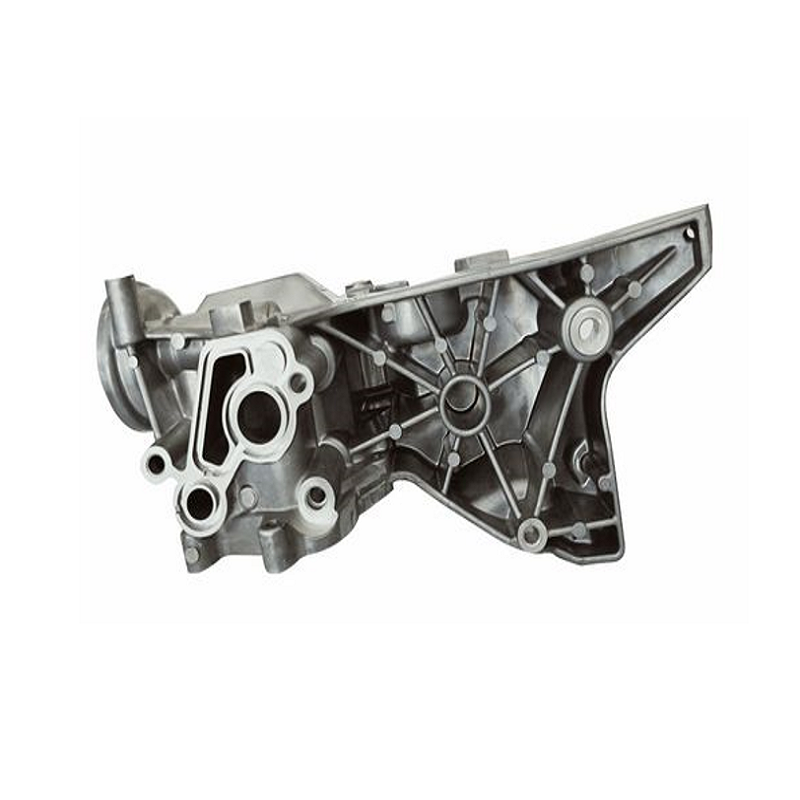
Deciding to move forward requires a strategic decision-stage framework. You must evaluate capital expenses against long-term piece-price savings.
You must calculate the exact return on investment (ROI) threshold. Hardened H13 steel dies require a high upfront capital expenditure (CapEx). Molds typically cost anywhere from $10,000 to over $100,000. However, the resulting per-unit price drops drastically compared to alternative methods. You find the breakeven point by dividing the tooling cost by the savings per part. For instance, if Die Casting saves you $20 per part over machining, a $40,000 mold pays for itself after just 2,000 units. Volume remains the ultimate deciding factor.
Follow these evaluation steps to determine if your geometry fits the process:
Assess Wall Thickness: Ensure your design features thin, relatively uniform walls to promote rapid cooling.
Evaluate Integration Needs: Look for opportunities to combine multiple assembled components into one solid cast piece.
Review Secondary Operations: Identify costly machining steps you can eliminate. The process easily creates near-net shapes directly from the mold.
Consider Cast-in Inserts: Determine if you need threaded fasteners. You can place steel inserts directly into the die before injection.
This capability dramatically reduces the need for secondary machining operations. You save assembly time and eliminate downstream manufacturing bottlenecks.
Engineers often debate between aluminum, zinc, and magnesium. Aluminum becomes the necessary choice under specific conditions. It wins when lightweighting is a top priority, offering an incredible strength-to-weight ratio. Aluminum also outperforms zinc when operating temperatures rise significantly. Zinc parts begin to lose mechanical strength above 200°F (93°C). Aluminum handles high-heat environments effortlessly.
Comparing your options helps mitigate financial risk. Each manufacturing method serves a distinct purpose in the product lifecycle.
Manufacturing Process | Tooling Investment | Per-Unit Cost (At Scale) | Cycle Time Speed | Ideal Production Volume |
|---|---|---|---|---|
Aluminum Die Casting | High ($10k - $100k+) | Very Low | Extremely Fast | High (>5,000 units) |
Sand Casting | Low | Moderate to High | Slow | Low to Medium |
CNC Machining | None / Very Low | High | Very Slow | Low Prototyping |
Injection Molding (Plastic) | Medium to High | Very Low | Fast | High (Non-structural) |
Sand casting requires minimal tooling budgets. You pack sand around a pattern. However, you destroy the mold after a single pour. This drives up the per-unit cost significantly. Die casting demands higher upfront tooling costs. Yet, it delivers a much lower cost at scale. Additionally, high-pressure injection forces metal into microscopic die details. This provides vastly superior surface finishes. It also holds tighter dimensional tolerances than gravity-fed sand molds.
Machining remains superior for low-volume production. It effortlessly achieves ultra-tight tolerances. You do not pay for custom steel molds. However, CNC machines cut metal away slowly. They simply cannot compete regarding cycle times. When your order quantities surpass 5,000 to 10,000 units, machining becomes far too expensive. High-pressure injection produces parts in seconds. Machining takes minutes or hours per part.
Both processes share similar high-volume economics. However, material properties dictate the winner. Plastic fails when parts require active thermal management. Aluminum acts as an exceptional heatsink. It draws heat away from sensitive electronics. Aluminum also provides natural electrical conductivity. Furthermore, plastic cannot match the superior structural rigidity of a solid metal chassis.
Different industries rely on this process for varying mechanical reasons. The applications span across critical global infrastructure.
Automotive & Aerospace: The process produces rugged engine blocks, complex transmission housings, and lightweight structural brackets. The core focus here centers on lightweighting. Automakers must increase fuel efficiency and extend EV battery ranges. They achieve this without sacrificing passenger safety or structural strength.
Telecommunications & 5G: Outdoor base station enclosures and massive heat sinks rely heavily on this process. The focus revolves around superior heat dissipation. 5G radios generate intense heat. Aluminum pulls it away. Furthermore, the solid metal provides natural EMI/RFI shielding. It protects sensitive radio frequencies from outside interference.
Industrial Equipment & Power Tools: Heavy-duty pump housings, dense compressor parts, and rugged power tool casings use this material. The primary focus involves vibration resistance. Factory environments and construction sites destroy weak materials. Cast aluminum ensures long-term durability under harsh daily abuse.
Medical Devices: Precision diagnostic hardware and heavy equipment chassis demand strict tolerances. The focus lies in absolute rigidity. Medical components must maintain precise optical alignments. They must also endure harsh, repetitive chemical sterilization protocols safely.
Experienced engineers maintain a healthy skepticism. You must acknowledge the physical realities and constraints of molten metal processes. Proper design mitigates these inherent risks.
Trapped gas remains a constant reality in high-pressure environments. The metal shoots into the die cavity in milliseconds. It traps ambient air inside the mold. This creates microscopic gas pockets called porosity. Porosity leads to structural weaknesses. Engineers cannot eliminate it entirely. However, they manage it effectively. Vacuum die casting systems suck air out of the cavity before injection. Strategic gating designs also direct molten metal smoothly. This pushes trapped gas toward designated vents.
Design Feature | Guideline Requirement | Manufacturing Impact if Ignored |
|---|---|---|
Wall Thickness | Keep it consistent (0.060" - 0.150") | Uneven cooling, severe warping, and sink marks. |
Draft Angles | Apply 1° to 3° on vertical walls | Parts stick in the mold, causing surface gouging. |
Internal Corners | Add generous radii (fillets) | Stress concentration leads to cracked parts or dies. |
Bosses & Ribs | Limit thickness to 60% of adjacent wall | Heavy metal pooling causes localized porosity defects. |
You must adhere to strict non-negotiable design rules. First, maintain consistent wall thicknesses everywhere possible. Thick sections cool slower than thin sections. This temperature difference warps the part. Second, you must include appropriate draft angles. A 1° to 3° taper allows the ejector pins to push the part out smoothly. Zero draft creates intense friction. Finally, you must avoid sharp internal corners. Sharp corners act as stress concentrators. They promote premature part failure.
Vendors must remain transparent about die lifespans. Molten metal creates severe thermal shock. The steel die rapidly heats to extreme temperatures and cools just as fast. This aggressive cycling causes thermal fatigue. Engineers call this "heat checking." Micro-cracks eventually form on the tool surface. These cracks transfer onto your finished parts. Typically, an aluminum mold lasts for 50,000 to 100,000 shots. You must plan for routine maintenance. You should budget for eventual re-tooling down the road.
Choosing the right vendor determines your long-term success. You need a partner capable of executing complex designs reliably.
Always verify a supplier's quality frameworks. Look for strict ISO 9001 compliance. This ensures they document their processes and track defects systematically. If you manufacture automotive or medical parts, demand IATF 16949 certification. This rigorous automotive standard requires advanced quality planning. It guarantees highly repeatable precision across massive production runs.
Avoid disjointed supply chains. Look for vendors offering comprehensive in-house secondary operations. Does the facility provide CNC machining under the same roof? Do they offer powder coating and final assembly? Integrating these steps reduces severe supply chain friction. It eliminates shipping delays between different subcontractors. Partnering with comprehensive Die Casting professionals drastically shortens your overall lead times.
A reliable partner will actively push back on your part designs. They should never blindly accept a flawed CAD model. Good engineers spot problematic thick walls immediately. They suggest adding ribs instead. They help you optimize draft angles. This proactive support maximizes tooling longevity. It minimizes frustrating scrap rates. Ultimately, strong DFM collaboration protects your project timeline and your budget.
The manufacturing landscape requires rigorous evaluation of cost, speed, and material performance. We have established several key truths regarding this process. First, it stands unmatched for high-volume, lightweight metal production. Second, the exceptional dimensional stability outpaces traditional sand casting. Third, the natural heat dissipation and rigidity easily outclass plastic injection alternatives. You must ensure your projected production volume justifies the initial tooling investment. Evaluate your annual usage accurately. Review your CAD models against strict DFM guidelines. We encourage you to submit a 3D CAD file for a comprehensive DFM review. Request a formal tooling and piece-price quote today. This crucial step will quickly assess your project's financial viability.
A: The lifespan heavily depends on the chosen alloy and part complexity. Generally, you can expect 50,000 to 100,000 shots. The aggressive thermal impact and extreme injection pressures of molten aluminum cause gradual surface fatigue, known as heat checking, requiring eventual mold maintenance.
A: Standard high-pressure components generally cannot be welded or T6 heat-treated. The rapid injection process traps microscopic air pockets, creating internal gas porosity. High heat causes these trapped gases to expand, creating surface blisters. Specialized vacuum systems must be used if welding is strictly required.
A: Evaluate MOQs through an ROI lens rather than a strict numerical rule. Typically, production runs below 2,000 to 5,000 units struggle to offset the heavy initial tooling cost. For lower volumes, CNC machining or traditional sand casting generally present a more viable financial path.
A: The process features a high initial tooling cost due to custom hardened steel molds. However, it delivers a very low per-part cost. Once the mold is paid for, the extremely fast cycle times make it highly economical and competitive at large-scale production volumes.


